There are more than 50 species of mosquitoes in BC, but only a small number are known to carry germs that can make people sick.
Most mosquito bites are harmless and only cause mild local irritation. In rare cases, mosquitoes can spread infections. Some mosquito-borne infections can be acquired in Canada (e.g., West Nile virus), while others are picked up during travel to other parts of the world (e.g. malaria). The risk of mosquito-borne illness in British Columbia remains low compared to other parts of North America.
Mosquito bites are most common during the warmer months, when people spend more time outdoors and mosquitoes are more abundant. The number of mosquitoes can vary depending on local conditions, such as temperature, wind, and presence of standing water where mosquitoes can breed. They can bite at any time of the day but are most active between dusk and dawn. Personal factors, such as age, overall health, the use of protective measures, and the types of outdoor activities, can affect the risk of mosquito-borne diseases.
Mosquitoes found in the environment can bite both people and animals. They can transmit the following infections to humans:
Mosquitoes are small flying insects. Only female mosquitoes bite people and animals, and their bites can cause itching and irritation, which is why many try to avoid them.
Mosquitoes breed in still or slow-moving water. Some species lay their eggs directly on the water’s surface, often laying 100 to 400 eggs at a time. These eggs can hatch within 1–2 days into larvae, which look like tiny worms. When conditions are warm, especially between 22°C and 27°C, the full life cycle from egg to adult mosquito can take less than 10 days.
BC is home to many different kinds of mosquitoes, but only some are capable of spreading diseases. For example, certain Culex mosquitoes play an important role in spreading West Nile virus in western North America. Other viruses, such as California serogroup viruses, can be carried by a wider range of mosquito types depending on the environment.
Because mosquito species and their habitats vary across the province, such as wetlands, agricultural areas, urban drainage systems, and forest edges, prevention focuses on practical steps everyone can take. These measures include avoiding mosquito bites and reducing standing water around properties.
In BC, mosquitoes are generally encountered between May and October. There are a few simple steps that can be taken to limit the number of mosquitoes on your property and prevent mosquitoes from biting you while you still enjoy the outdoors.
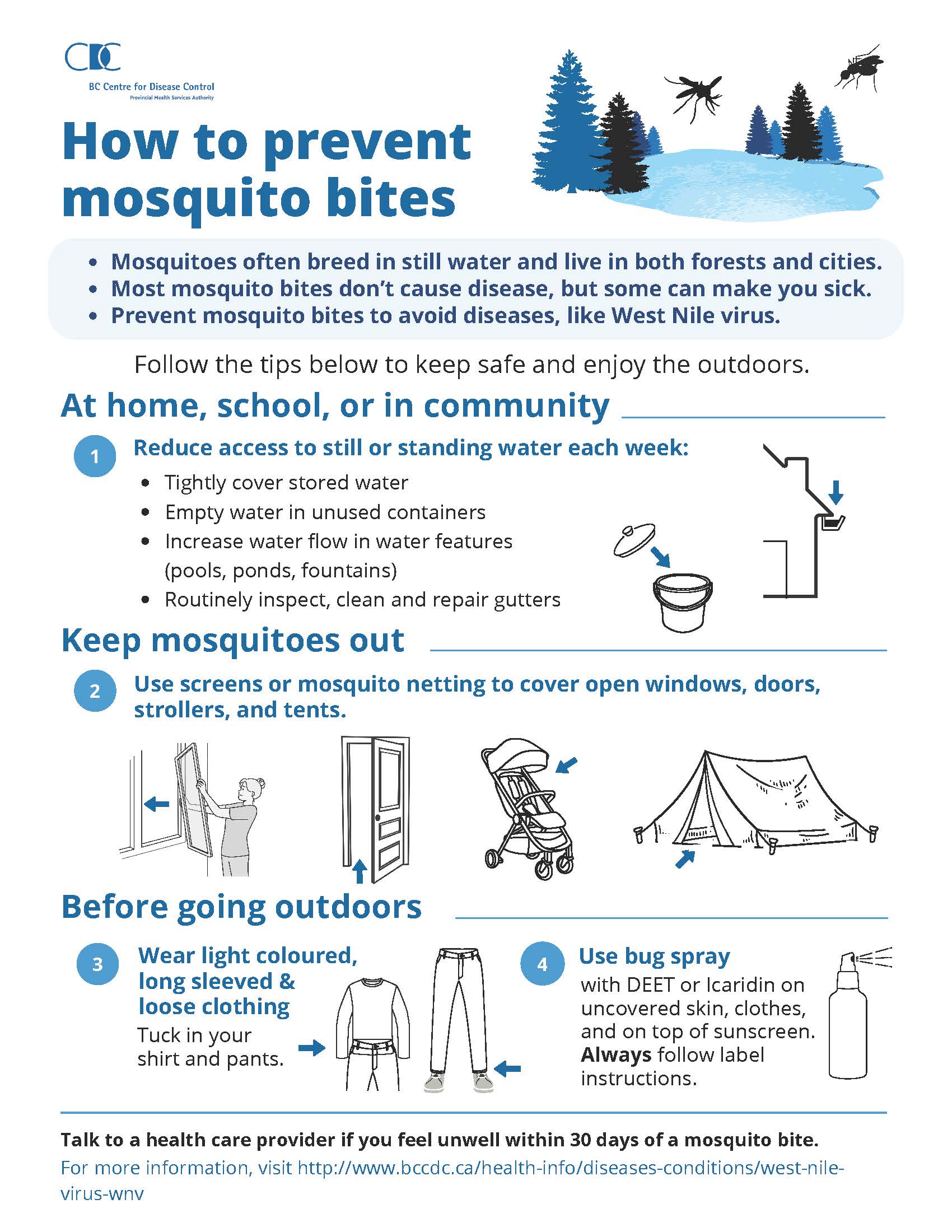
- Identify sources of still or standing water where mosquitoes might breed and remove or reduce access to these water sources by:
- Tightly covering stored water
- Emptying water in unused containers
- Increasing water flow in water features (pools, ponds, fountains)
- Routinely inspecting, cleaning, and repairing gutters.
- Keep mosquitoes out by using screens to cover open windows, doors, and tents.
- Use mosquito netting to cover strollers.
- Before going outdoors:
- Wear light-colored, long-sleeved, and loose clothing.
- Use bug spray with DEET or Icaridin on uncovered skin, clothes, and on top of sunscreen by following the instructions on the label.
- If travelling outside of Canada, visit a health care provider or travel health clinic at least 6 weeks before you travel as there may be vaccines or medications that can help protect against mosquito-borne diseases that are not found in Canada.
Mosquito-borne disease surveillance typically contains data from human, mosquito, and animal sources to understand where and when the risk may be higher.
BCCDC collaborates with public health partners to monitor mosquito-borne diseases in BC. The mosquito-borne diseases dashboard is updated with positive detections as they occur. BCCDC additionally collaborates with partners in a research capacity to conduct targeted mosquito trapping and testing for pathogens.
The risk of mosquito-borne diseases is closely tied to mosquito activity, which usually runs from May to October in British Columbia. Risk is higher in mid to late summer, when mosquito populations are at their highest.
Weather and local conditions can influence the risk. Warm temperatures, rainfall, and standing water (such as ponds, ditches, or containers) can all increase mosquito numbers and activity. Risk can also vary by location, for example; it may be higher near wetlands, forest edges, agricultural areas, or places with poor drainage.
Most mosquito bites only cause mild itching and irritation. After a bite, try not to scratch and monitor how you feel.
Seek urgent medical care if you develop serious symptoms such as fever, confusion, a severe headache with a stiff neck, seizures, weakness, or trouble speaking, especially during mosquito season or if you’ve traveled to an area with mosquito activity. Some mosquito-borne diseases, such as malaria, can be treated with antimicrobial medications.
Unlike ticks, which can sometimes be submitted for identification, mosquitoes collected by members of the public are not tested individually. Instead, public health teams monitor mosquito-borne diseases through organized trapping and laboratory testing programs.
Mosquitoes are collected in groups and tested together to monitor for invasive mosquito species and to check whether certain pathogens are present in a
specific area.